Reliable and professional golf wholesale website where you can buy wholesale golf equipment and discount golf clubs, including golf drivers,golf irons,golf putters anywhere in the world!

Monday, January 21, 2013

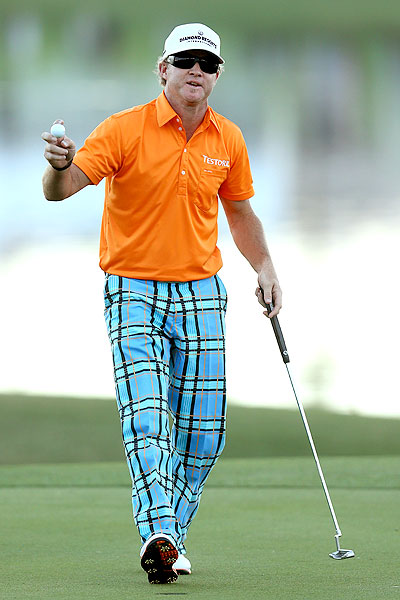
Brian Gay beats the odds again


Brian Gay beats the odds again

Updated: January 21, 2013, 11:23 AM ET
By Farrell Evans | ESPN.com
With Tiger Woods and Rory McIlroy missing the cut at Abu Dhabi, and making news mostly for everything but good play, the golf world focused its attention on the Humana Challenge in La Quinta, Calif on Sunday. In the California desert, Brian Gay stopped the youthful surge on the PGA Tour with his fourth career win.

Father Time

Seeing Brian Gay on a PGA Tour driving range, you might wonder what's so special about him. He doesn't hit it long or particularly pure all the time. But once you study his career you learn that he's battled depression, injuries and swing changes to become one of the toughest competitors on tour.
[+] EnlargeBrian Gay
Stephen Dunn/Getty ImagesBrian Gay came roaring back to win the Humana Challenge.
To those who know the 41-year-old former Florida Gator, it wasn't surprising that he shot a 9-under 63 on Sunday to come from six back at the start of the day to win the Humana Challenge. After Russell Henley's rout at the Sony Open, it looked as if another 20-something might snag a victory for the second week in a row.
Scott Stallings was a good bet to win his third PGA Tour title after starting the day with a five-shot lead.
But Gay knows something about beating the odds. After bruising his ribs in a ski accident in December 2005, he battled depression for a while. Yet, he would pick himself up, and in 2009 he won twice. Last year, he struggled through another swing change. With former PGA Tour player turned swing instructor, Grant Waite, he worked to gain some distance with his driver.
"I feel like it's coming around," Gay said. "It's helped me a lot, and I was just trying to get more efficient with my driver numbers to kind of max out my distance."
On Sunday, Gay got everything out of his game on the Palmer Private course at PGA West in La Quinta, Calif. As good as the future looks for young players like Henley and Stallings, there is still a bright future for the old guys.
For Gay, Father Time hasn't come calling yet.

Learning Curve For Scott Stallings

On Sunday, Scott Stallings lost a five-shot lead, but had the 72nd hole to salvage his third career win in as many years on tour. All he needed to do was find the green with a 6-iron on the par 5 18th and walk away with a two-putt birdie for his second trip to the Masters.
But he pulled his approach shot left into the water. Then, he couldn't get up and down for par to get into the playoff with Gay, David Lingmerth and Charles Howell III.
"Felt like I made a good swing, just [that the] ball came off a little right and got a bad kick and went in the water," said the 27-year-old former Tennessee Tech star. "But it is what it is. Coming down the stretch on the 72nd hole, you can't make mistakes like that. And it stinks, but it's something that I'll definitely learn from."
Stallings is a fast learner, and he will only get better from this setback. He's one of the brightest young players on tour. He can hit the ball a country mile and make putts under pressure as he demonstrated in his two wins, the Greenbrier Classic and the True South Classic. He still has several chances left to get into the Masters field by April.
The tour is full of good young American players: athletes with true grit and ice in their veins. By the end of the year, both Stallings and Russell Henley, who won the Sony Open, could be in the top 30 on the money list and headed to the Presidents Cup in October.

Rory's New Adventure

On Thursday, after his 3-over 75 in the first round of the Abu Dhabi HSBC Golf Championship, Rory McIlroy made some glaring excuses in his post-round interview.
First, he proclaimed that he was in an "experimental period" with his new golf clubs, and that he would take four weeks off after the tournament to work out some of the kinks.
Abu Dhabi was phase one of the trials.
In other words, he wasn't prepared to win the event. And when he is ready on a bigger stage, say, at his next tournament, the Accenture Match Play n February, he hopes to have a product ready for market. But until such a time comes when he feels like the old Rory, his tournament appearances are for "experimental" use only.
Here is the difference between him and Tiger Woods. Through his numerous swing changes and injuries, Tiger has never put warning labels on his game. Tiger has attributed some of his inconsistency to pain or some swing flaw, but he's always played to win. Watching him grind his way through every shot, you never feel like he's shuffling around in a glorified demo day, experimenting with new clubs.
Second, McIlroy said he was rusty. That's a reasonable gripe. He hasn't played a competitive round in eight weeks. But much of the field is dusting off some rust as this point in the season. When the starter calls your name, you have to be ready to play.
Then before Friday's second round, he dumped his new Nike putter for his old Titleist Scotty Cameron. To explain the decision and his failure to make any putts and another 75 to miss the cut by four shots, McIlroy gave a geeky explanation about the putter's weight.
"I just felt like the greens that I've been practicing on in Florida are a lot faster than these," he said. "The putter, the Nike putter is great on that. But then getting to here, it's just a lighter so it's just a weight issue more than anything else.
"I can feel the head of this one I used today a little bit better. On fast greens, the other one works fine."
One poor round on the greens is all it took for him to go back to his battle-tested putter. That's not enough time to know if anything works, especially after eight weeks off. Plus, the weight is the easiest thing to change.
Four weeks off won't be enough for McIlroy to solve any issues he has with the new equipment. Through competition, he's got to find confidence with his new wares.
I don't completely agree with some that he shouldn't have changed equipment. That's his prerogative. But with the shift, he has certainly brought on himself an unnecessary distraction.
McIlroy shouldn't get too ahead of himself, believing that every tournament leading up to the Masters is simply some trial period in preparation for that glorious week in April.
A player's year still unfolds shot by shot, tournament by tournament.
McIlroy can't lose that free-swinging, excited working-class kid from Holywood, Northern Ireland to superstardom and fancy new branding. The proof of his success this year will not be in how well he adjusts to the new clubs, but how determined he is to put all of that new stuff out of his mind and just play golf.

Tiger's Real Mistake

Failure to comply with the Embedded Ball Rule cost Tiger Woods two shots and a place in the weekend at the Abu Dhabi HSBC Golf Champions. But it never should have come to that. Tiger didn't play well. In his two rounds at Abu Dhabi, he hit only 39 percent of his fairways.
"I didn't hit it particularly well," he said. "I putted great, but just didn't hit it very good."
In recent years, Tiger has focused on his full golf swing under the tutelage of Sean Foley. The more he talked about his swing change, the more crucial short putts he seemed to miss.
At Abu Dhabi, he talked about working back from the green.
"When you're 11 months old, you're not going to be bombing drivers out there," Tiger said. "So that's how I learned the game, and every offseason I do the same thing."
If Tiger is to win his first major championship since the 2008 U.S. Open at Torrey Pines, he will need to find that wizardry with the short game that helped him to 14 majors. He'll be back at the site of that heroic win this week for the Farmers Insurance Classic. He's looking for his ninth career win at Torrey Pines.
His fabulous memories at the San Diego course will help him quickly forget the missed cut and embedded ball at Abu Dhabi.

Player's Captain

During the European Tour event in Abu Dhabi, Paul McGinley was named the European Ryder Cup team captain at Gleneagles in 2014. McGinley had a very vocal lobbyist in Rory McIlroy.
"I have a very strong opinion about this," McIlroy said. "I really think Paul deserves it.
"He has been a great player and a great personality for the European Tour over the years. I also played under him at the Seve Trophy in 2009, and I thought he did a great job. From all the captains I've played under, I think he was the best."
Ian PoulterLuke Donald and Justin Rose joined McIlroy in support of McGinley.
This prompted Jason Dufner to say that the players should have more say in the selection of the American captain. Dufner, who was 3-1 in his first Ryder Cup at Medinah, said that the European players are "going to come together" because of the role players had in choosing McGinley.
Over the years, PGA of America has asked from input from players, but the organization of club professionals makes the final decision on the U.S. captain.
The PGA's control was fully evident in its selection of Tom Watson to the U.S. captaincy for the 2014 matches. Fed up with the recent European domination of the matches, PGA of America president Ted Bishop personally reached out to the eight-time major champion and prepared a long dossier as to why Watson was the right man for the job. If the tour players had a chance to voice any opinions on the decision, it was merely a courtesy, because the PGA was set on its candidate.
There are problems with both approaches.
An activist group of players could turn the selection process into a situation in which players mount their own campaigns to pick their favorites, with influential stars like McIlroy using their clout to sway other players.
What are the chances all the players are going to agree on the same captain? Division within the player corps over the captain could lead to dissension on the team.
The PGA's centralized process can be a little dictatorial and top-heavy, but with some player input it's the closest thing possible to a democratic process.
The European team was going to come together around any of its candidates. That's because the matches are not about the captains, but the men who line up to play for three days every other year.

Expectations for Tiger at Torrey?


Expectations for Tiger at Torrey?

And what proved more difficult for McIlroy, new clubs or rusty swing?

Updated: January 21, 2013, 9:41 AM ET
ESPN.com
It was a tale of two deserts this week, one in the Middle East and one in California. Tiger Woods and Rory McIlroy kicked off their seasons in less-than-stellar fashion with missed cuts while other household names like Phil Mickelson teed it up for the first time in 2013 on the PGA Tour.
So what to make of Tiger and Rory going home early? And what about Brian Gay's playoff victory in a barrage of red numbers? Our experts tackle those topics and more in this week's edition of Monday Four-Ball.

1. After a missed cut in Abu Dhabi, what do you expect from Tiger Woods this week at Torrey Pines?

Michael Collins, ESPN.com senior golf analyst: I still believe Tiger has a top-20 in him this week. It's one of those places where the old adage comes into play, "No matter how bad you were hitting it before …" And this is a place of comfort for Tiger. He'll find a way to get it around.
Farrell Evans, ESPN.com senior golf writer: Tiger has won a combined eight times as an amateur and pro at Torrey Pines. He loves the place. If he can't play well here, where can he?
Bob Harig, ESPN.com senior golf writer: He will be in contention this week. Had he not had the rules issues in Abu Dhabi, Woods very well might have got things turned around on the weekend and threatened the top 10 after a poor start. He's had a few extra days to practice and is going to a venue he loves.
Kevin Maguire, ESPN.com senior golf editor: Abu Dhabi was an aberration that shouldn't impact what Tiger does this week at the Farmers Insurance Open. If anything, his 10th career missed cut should help him this week as he's traveling back across 12 time zones and had a couple of extra days to get shake off the jet lag.

2. Bigger issue for Rory McIlroy in Abu Dhabi: New clubs or rusty swing?

Michael Collins: Rusty swing. But what will happen, as the swing stays off, the clubs will get blamed, the confidence in them will falter and changes will start coming in the golf bag (it started with the putter already.) This is nothing new in golf, just with Rory.
Farrell Evans: New clubs. He's not going to always have his best stuff, regardless of the time of year. But he has to always trust his equipment, and this week he didn't have that trust.
Bob Harig: Both, but more of the latter. The new clubs will take a little getting used to, but more than anything McIlroy seemed to be competitively rusty and uncomfortable off the tee. He's got a month to get things on track before the Match Play, unless he decides to add another tournament.
Kevin Maguire: I'll go 80-20 rusty swing over new clubs. The clubs will take time and I wouldn't be surprised if he added another tournament between now and the WGC-Match Play, his next expected start. A few more tournament reps wouldn't hurt as he prepares to get ready for a run at the Masters.

3. Bigger surprise: Stewart Cink's T-10 finish or Scott Stallings not making the Humana Challenge playoff?

Michael Collins: Stallings not making the playoff. It's funny what a Sunday 5-shot lead will do to your psyche. Three days he plays offense and no bogeys. On Sunday, with a 5-shot lead, he goes to the prevent defense and puts up three bogeys, including hitting it in the water on the 18th with only 219 yards left in for a second shot. Bogey on 16 really shook him, but to get to the next level you've got to get that birdie on 18.
Farrell Evans: Stallings. On a par-5, he had a 6-iron in his hands for his approach shot and couldn't make a four. That won't happen too many times in his career.
Bob Harig: Stallings. After such a stellar tournament, to bogey two of the last three holes to miss a playoff by 1 stroke is pretty tough to take.
Kevin Maguire: Cink's top-10. Even though he didn't have a great Sunday (68 isn't terrible, of course), Cink's career since his Open Championship victory in 2009 isn't one to write home about. Stallings has victories in each of the past two years, so I certainly expected him to close it out Sunday. But Cink's rise this week will hopefully for him portend bigger things to come this season.

4. More fun to watch: Birdie fests like the Humana Challenge or U.S. Opens where par is your friend?

Michael Collins: Birdie fests. If I want to watch guys struggling to make par, I go to my course and watch my friends. I like seeing pros struggle once or twice a year, but on a weekly basis I want to see them do what I can't … shoot in the 60s for four days straight.
Farrell Evans: I like birdies. Par is good a couple of times a year in majors. But it's boring for the fans that don't pay to watch their heroes play like them.
Bob Harig: Both. A good mixture of both is necessary to provide some variety in golf. The Humana wouldn't work if it were set up like the U.S. Open, and consequently, we'd probably be disappointed if the U.S. Open yielded a ton of birdies and were not one of the most difficult tests of the year.
Kevin Maguire: I prefer 25 under versus 3 over. I like seeing the best in the game do something I can never dream of doing (short of video game golf.) Then again, that sort of is the appeal of even par winning a major … when even the best in the game struggle to make pars like we do every time we tee it up, under vastly different conditions of course.

MLK's impact extended to golf


MLK's impact extended to golf

Updated: January 21, 2013, 7:45 AM ET
By Farrell Evans | ESPN.com
Too often, the memory of Dr. Martin Luther King, Jr. is shrouded in sweeping platitudes. The symbolism of his dream comes around to us as holidays do with much fanfare then silence until the next year. But Dr. King's death was a national tragedy of epic proportions that ensnared even the mostly sheltered world of professional golf.
On Thursday, April 4, 1968, the Greater Greensboro Open began at the Sedgefield Country Club in Greensboro, N.C.  Billy Casper took the first round lead with a 6-under 65. That afternoon in Memphis at around 6 p.m., Dr. King was cut down by an assassin's bullet on the balcony outside his motel room. The civil rights leader was in Tennessee to support the city's striking sanitation workers.
[+] EnlargeCondi Rice
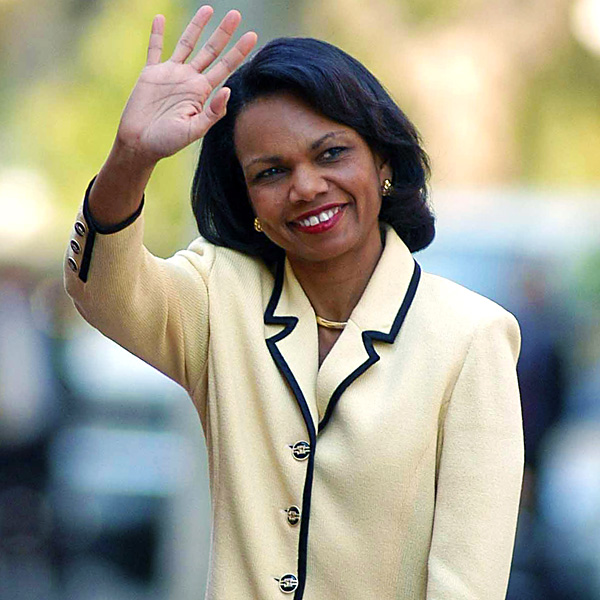
AP PhotoHow would Dr. Martin Luther King Jr. handle the news that an African-American woman and former U.S. Secretary of State, Condoleezza Rice, would become one of Augusta National's first two female members? Amazement would likely have been his reaction.
President Lyndon B. Johnson declared a national day of mourning on the Sunday after the assassination, so most sporting events were postponed, including the final round at Greensboro. In the 36-hole Monday finish, Casper shot 69-66 to win by four shots.
That Tuesday, King's funeral services were held in Atlanta. According to Alfred Wright of Sports Illustrated, when the Masters started two days later 150 miles up the road in Augusta, the mood was somber.
"Quiet" is how one player after another described the atmosphere as they came off the golf course during that first round.
The 1968 Masters is best remembered for Roberto De Vicenzo incorrectly signing his scorecard to miss a chance to get in a playoff with Bob Goalby. But on an international stage, the major championship was overshadowed by the sadness and violence that consumed the country in the aftermath of the death of one of America's greatest heroes.
In golf, we tend to look primarily at Charlie Sifford and Lee Elder as the trailblazers to social justice and recognition for blacks in the sport. Yet, Dr. King left his own specific imprint on the game. 
The Civil Rights Act of 1964, which King pushed for perhaps harder than any man in America, banned segregation in public facilities like municipal golf courses and swimming pools. The law enabled blacks in the south widespread use of public golf courses for the first time.
Four days after King's death, John Conyers, a Michigan congressman, introduced legislation on the House floor to commemorate King's life, but Congress took no action. So young civil rights workers started petitions and conducted protests at public events, even golf tournaments.
During the third round of the 1969 PGA Championship at the NCR Country Club in Dayton, Ohio, protesters walked on the 10th green as Gary Player and Jack Nicklaus lined up their putts. One of the protesters picked up Nicklaus' ball and threw it into a bunker. Another protester told Player, a South African, "it's not against you or your country, it's against the PGA Tournament."
Earlier in the week, the protesters, members of the Southern Christian Leadership Conference, an organization King had helped to found in 1957, presented a list of 27 demands to the PGA Tour. The demands included 2,000-3,000 free tickets for the poor as well as recognition of a national holiday on King's birthday.
But it would be 1986 before Martin Luther King, Jr. Day was observed as a national holiday.
On the King holiday in 2009, the Northern Trust Open announced that it had created a special exemption for a player who represents the advancement of diversity in the game. The exemption honored Sifford, the first African-American to earn membership on the PGA Tour. 
This year marks the 50th anniversary of King's "I Have a Dream" speech on the National Mall in Washington, D.C. The country has made significant strides in fulfilling Dr. King's dream of a nation not consumed with racism, in which every person is judged on the content of his or her character, not skin color.
But there is still much work to be done. The multi-billion dollar golf industry still doesn't fully reflect King's multi-racial vision of America. Programs like the First Tee promise black and hispanic children the opportunity to learn important life skills, but the organization and its sponsors need to do more to integrate minorities into the daily workings of the elite corporate culture of golf with more internships and jobs.
More than 50 years after Sifford first came on tour, Tiger Woods is the only player of African descent with membership. There are just two African-Americans -- Joseph Bramlett and Jeremiah Wooding -- with any status on the Web.com Tour.
But the dour number of blacks on tour is a larger problem than just race.
"My biggest problem is that I've got no sponsors or backers," Sifford said in 1963. "Every time I go into a tournament, I'm strictly on my own. I know I'm playing for my bread and butter. The result is I try too hard. I can't be relaxed. I'm always pressing."
Sifford, who was inducted into the World Golf Hall of Fame in 2004, could have been speaking for most pro golfers, even in 2013. But perhaps the tour could do more with its vast financial and organizational capabilities to bring more blacks to the professional game.
Dr. King would have been proud of our golf-playing African-American president, our multi-racial 14-time major champion and a black female Augusta National member.
Condi Rice grew up in segregated Birmingham, Ala., in the 1960s. Rice was a kindergarten classmate of one of the four little girls who was killed in the 1963 bombing of 16th Street Baptist Church.
A black female Secretary of State was inconceivable when King wrote his famous Letter From Birmingham Jail in 1963. Back then, the only black women in the Augusta clubhouse were cooks and maids. Now, Rice wears a green jacket and sits among titans of industry as an equal.
Barack Obama, Tiger and Rice stand on the shoulders of Dr. King's legacy. We all do.

Friday, January 18, 2013

Tiger Woods wants to remarry ex-wife Elin Nordegren, but it will come at a cost: report

Tiger Woods wants to remarry ex-wife Elin Nordegren, but it will come at a cost: report


No place like home ... Tiger is reportedly chasing his ex-wife Elin. Source: Karen Bleier / AFP


Tiger Woods is a single man these days, but he may not still be over his ex-wife Elin Nordegren.

According to the National Enquirer, Woods wants to remarry Nordegren and he's offering a huge chunk of change to get her back. The magazine also reports that Tiger even proposed to her over Christmas, getting down on one knee and presenting Nordegren with a ring.

Nordegren is reportedly considering the proposal from Woods, who is desperate to get Nordegren back, but wants a $350 million anti-cheating clause added to the contract.

Woods' proposed deal reportedly is worth over half of his estimated $600 million fortune.

"Tiger didn't even balk at the demand. Even though his accountants think he's crazy, he's ready to sign the pre-nup and set a wedding date," a source told the magazine.

"The guy has never recovered from being dumped by Elin. He's dated lots of models and bimbos, but none of them were more than a one night stand."

Woods and Nordegren met in 2001 after being introduced by Swedish golfer Jesper Parnevik, for whom Elin was a nanny. The couple became engaged in November 2003 and married more than a year later in October 2004.


Woods and Nordegren have two children, but the marriage went awry after Nordegren discovered Woods had been cheating on her with multiple women. After learning of such news at Thanksgiving in November 2009, she allegedly attacked Woods, who crashed his car into a tree.

Since the divorce, Nordegren has dated billionaire Jamie Dingman and reportedly NHL player Douglas Murray.

Woods and Nordegren have been living apart since 2010 as Nordegren works to rebuild her mansion in Palm Beach, Florida.

Monday, January 30, 2012

TaylorMade R9 TP Irons Design Velocity Control Chamber

The new technology is called Flight Control Technology and made by TaylorMade. It appears in R9 and R9 TP, which will be hitting retails stores. FCT is also used in a new Rescue TP coming now.

TaylorMade R9 TP Irons are engineered to, above all, deliver an exceptional degree of distance control and consistency, which is critical to any player who competes at a high level or wants to. R9 Irons designed to deliver modern performance and tremendous distance in a more classic package. For the R9 and R9 TP irons, TaylorMade sought to design an iron that combined modern performance (as in forgiveness) with superb distance in a classic frame. In order to pay special attention to each iron across the entire set, TaylorMade's R&D took different approaches for the long irons and the short irons.

Let's see the R9 TP Irons in detail. A classic shape is combined with new technology to enhance performance. A space behind the face is filled with light, dense foam that improves feel. Perimeter weighting increases the size of the hitting area. The TaylorMade R9 TP irons should suit golfers who want a compact head without sacrificing distance, need better consistency throughout the set, and would like to hit their long irons better. Cheap golf club sets the shape of the head is very similar to that of the popular Tour Preferred irons, but by use of the Inverted Cone Technology, and the way the face blends into the hosel, there is a larger overall contact area. One standout design feature in the R9 TP is the variable progressive face thickness. As the irons get shorter, the face gets slightly thicker. The 2-5 irons have a face that is 2mm thick, whereas by the time we get to the 8-iron, 9-iron, and PW, the face is up to 2.5mm.

TaylorMade R9 TP Irons Main Features:
>Velocity-Control Chamber (VCC) delivers a significant increase in COR to promote distance.

>Progressive changes in head construction and face thickness from short-irons to long-irons results in increased control for short R9 TP irons and increased ball speed in long irons.

>Inverted Cone Technology in 2-5 irons provide fast and consistent ball speed across the clubface.

>KBS 90-gram steel shafts and Fujikura Motore graphite shafts provide premium stock shaft options for every player type

TaylorMade R9 TP Irons come equipped with KBS Tour Series steel shafts, the KBS Tour Series shaft designed for better players and engineered with "moment of inertia analysis" to increase stability from grip to clubhead, which promotes enhanced results on well-executed swings. The handsome looking of the bevelled top line and the narrow soles work well with the blended hosel and minimal offset to provide the look as well as the performance of a true Player's Iron.

Thіѕ article іѕ frοm http://001-blogspot.blogspot.com/. Alѕο, wе recommend ѕοmе gοοd Callaway X24 Hot Irons tο уου. Thanks fοr reading mу article!

I аm a golfer! If уου want tο сhοοѕе discount golf clubs for sale such аѕ Taylormade burner superfast 2.0 driver TaylorMade R9 Driver Taylormade R9 Max Driver and TaylorMade R9 SuperTri Driver уου mау аlѕο visit Thе http://okgolfsales.com/

Ping Game Improvement G20 Driver

Nowadays, the world is developing so fast, and full of competition in every where. If you want live better in the world. You need to work hard to suit the situation. Look at the golf market, TaylorMade, Callaway; Mizuno and Ping compete with each other, they want to create much better golf to satisfy the market and hold the market.

Pingcompany product the hot sale lines of G20. As a general rule PINGsaren't the prettiest-looking clubs, but looks aren't everything. Although it helps to have a driver that has an appearance that inspires confidence while you're standing over the ball, high-level performance is even more important. And the Ping G20 Driver delivers that kind of performance. In fact, it's built to deliver a nice blend of forgiveness and power. Along the way, it also manages to have some reasonably-decent looks. Holding the G20 in your hand makes you just stare at the club in wonderment. You notice a powerful yet elegant shape made of titanium that just wants you to unleash it on some poor unsuspecting golf ball.

Ping has built a club that will forgive those slight over the top swing flaws, or a little too handsy pull hooks. Still, make no mistake, if you are unable to correct a vicious over the top move, and serve up more slices than Tony's Pizza Parlour. The G20 driver has a heavier head than G15 (7 grams more than standard) for greater force at impact. Cheap golf club sets the reconfigured clubhead — 5 percent higher moment of inertia on heel or toe hits — combines with a light, 45.75-inch "high-balance point" shaft (TFC 169D or TFC 169D Tour) to boost clubhead speed and, thus, distance. Specifically, the TFC 169D shaft has more flexible tip and butt sections for softer feel. The driver comes in 8.5-, 9.5-, 10.5- and 12-degree lofts. I tried a 10.5-degree driver with a regular flex shaft. That is well above average, but gone are the days of 7.5* Tour Models, and 13.5* High Launch models. Ping of course offers a litany of custom shaft options as well, but again, The TFC 169 model fits these very well. There is also a "Tour Model" version of the shaft, but my hands, wrists, and shoulders say it's the same shaft that's been tip trimmed for stiffness and lower launch.

Ping G20 Driver Main Features:
>High launch/low spin characteristics maximize distance and accuracy
>Club head is made from a Ti8-1-1lighter low density alloy for high strength to weight ratio

>Additional weight is strategically placed around the horizontal and vertical axis to increase MOI

>Variable wall thickness on face and crown

>High balance point shaft allows you to swing more weight/mass at the same speed

The article is from http://oobgolfclubs.blogspot.com/ Also, we recommend some goods Callaway drivers to you. Thanks for reading my article!

I am a golfer! If you want to Choose discount golf clubs for sale such a Callaway RAZR Hawk Driver Callaway Diablo Octane Driver Callaway Diablo EDGE Driver Callaway X24 Irons and ping g20 driver you may also visit the http://okgolfsales.com/